Fantasy sports meets
skill-based gaming.
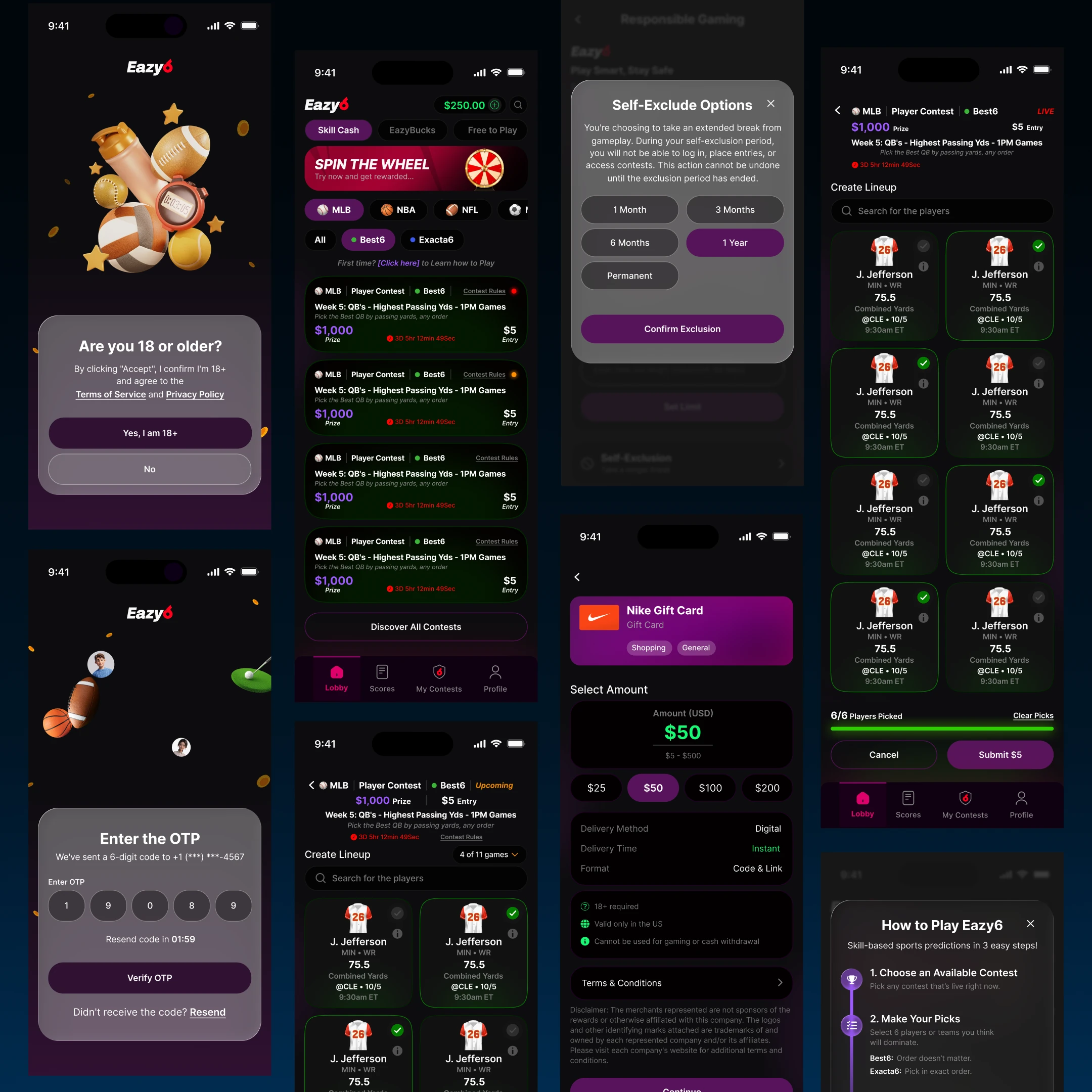
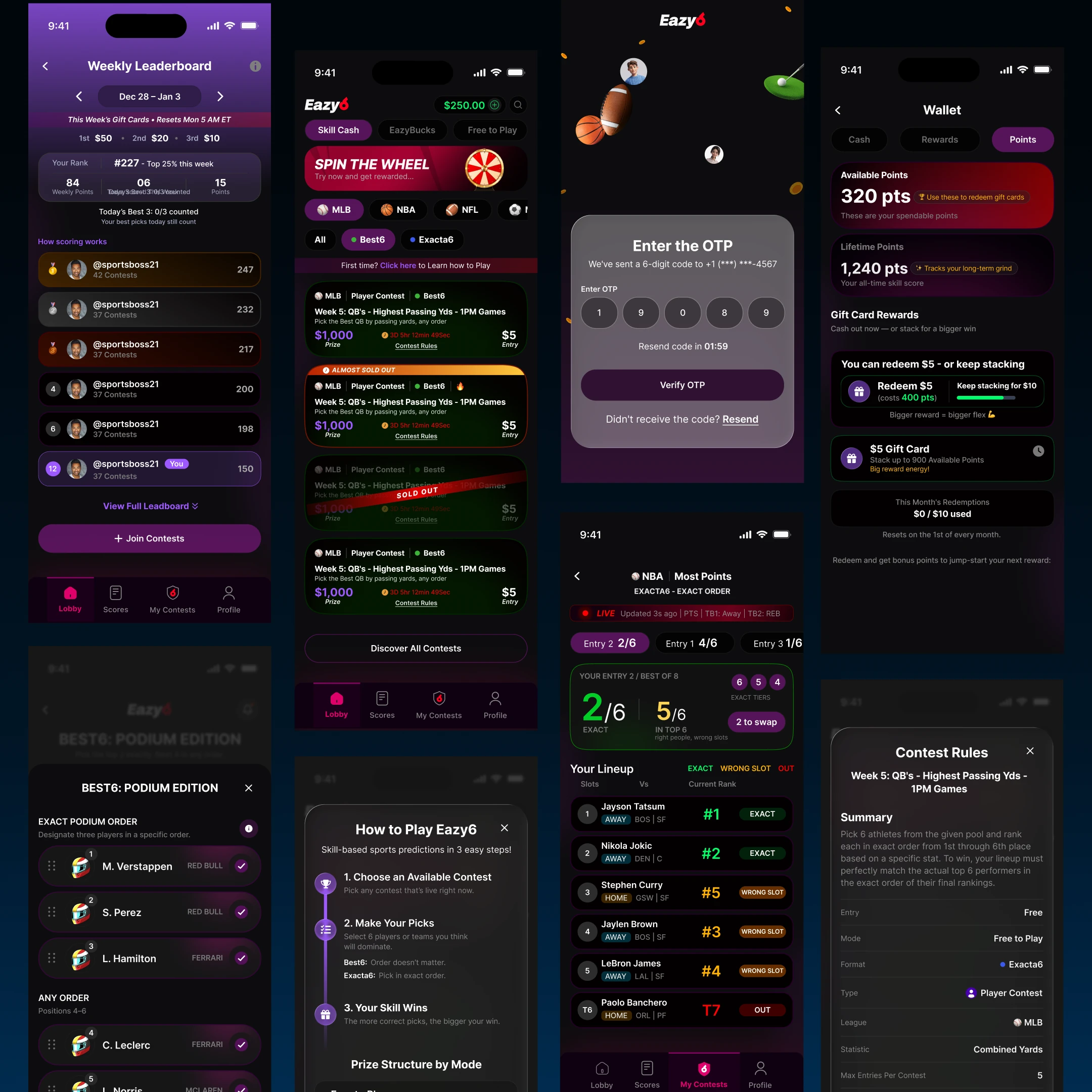
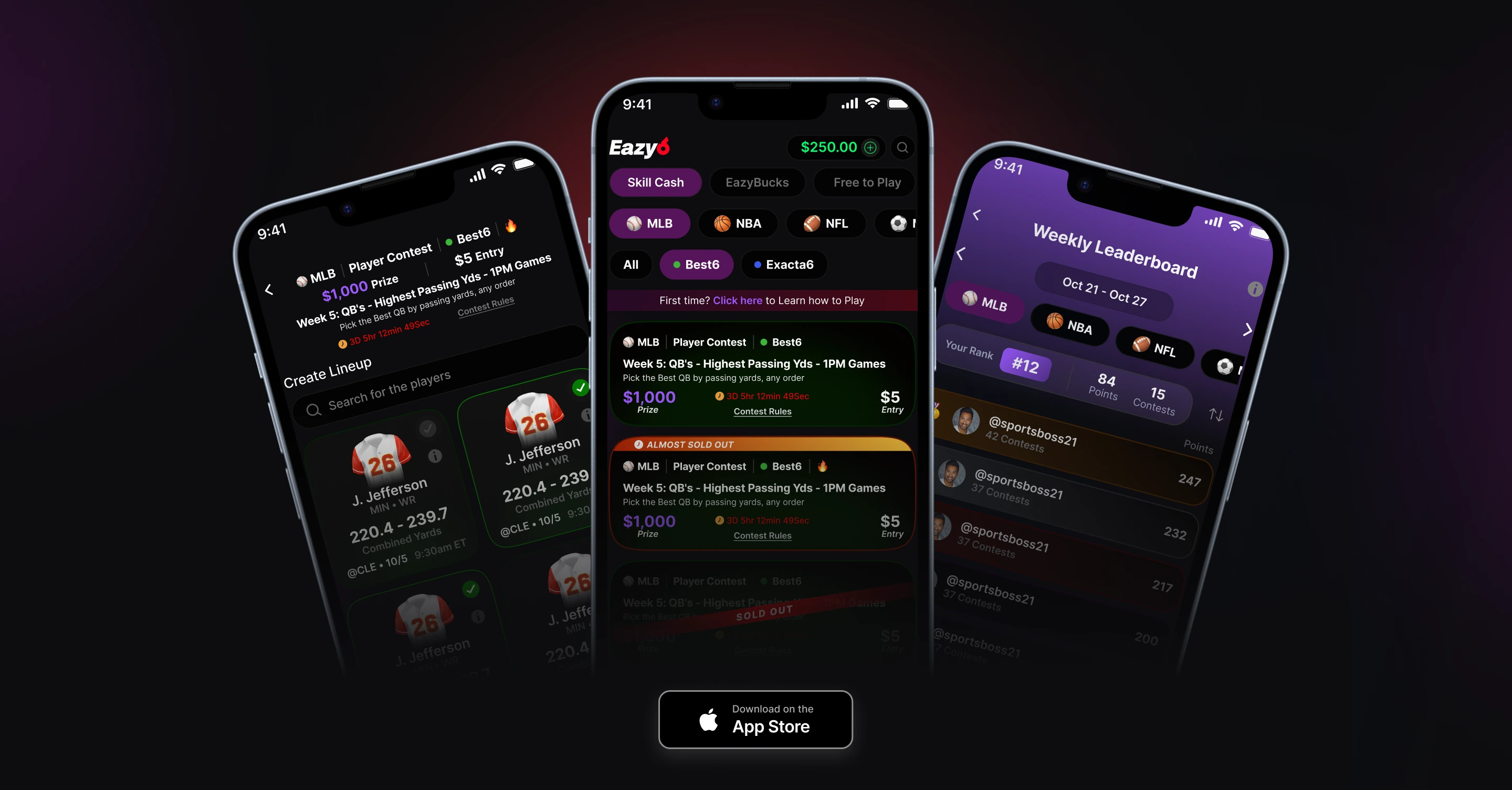
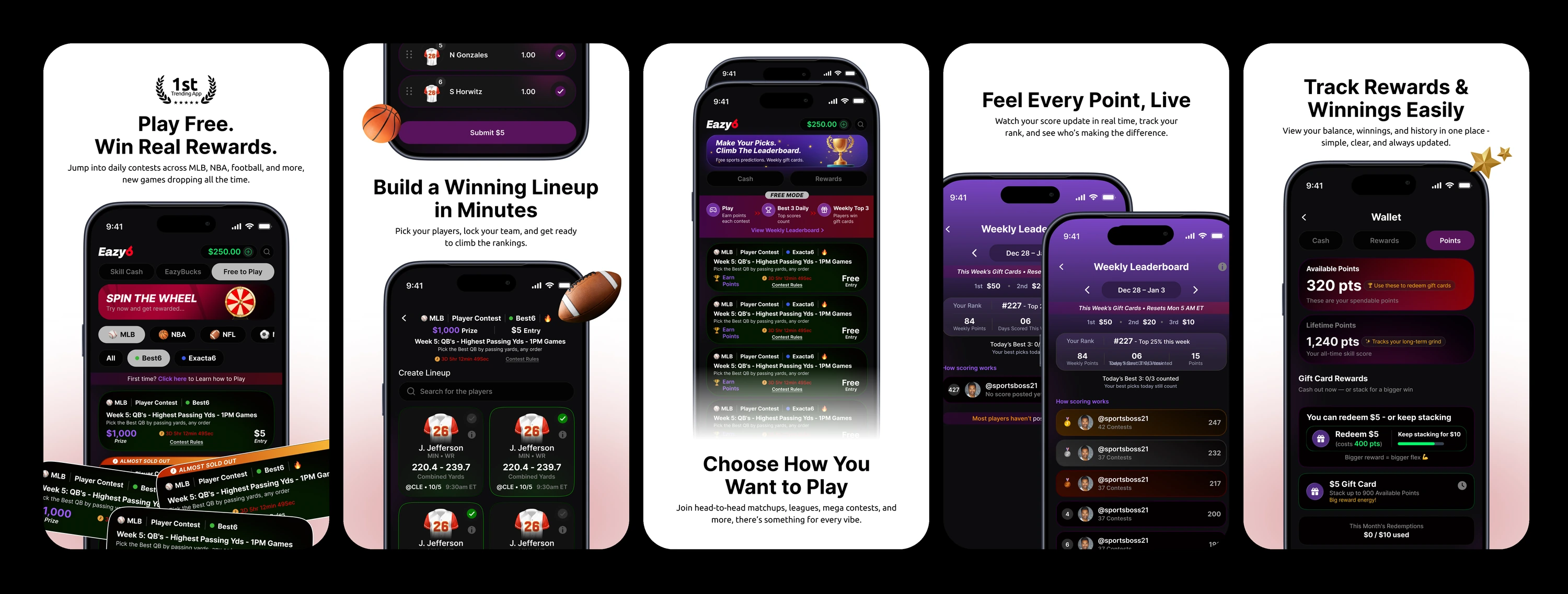
Eazy6 is a skill-based contest platform where users apply sports knowledge in competitive gameplay. Users select players from real game lineups and compete based on those players' actual performance, for real money.
Three play modes: Cash Mode (real money), EasyBucks (platform currency), Free-to-Play.
Not just who wins — but in what order. Skill depth, approachable entry.
Design a domain you've
never worked in before.
This was a 0→1 build, nothing existed. The brief: design the complete UI/UX of a real-money sports contest app for the US market (Gen Z and millennial audience) from scratch.
The challenge was threefold: I had no prior experience with US sports gaming. The gameplay mechanics were genuinely complex, six different formats, real-money stakes, live contest state tracking. And the target audience had extremely high visual standards, shaped by DraftKings, PrizePicks, Sleeper, and other polished competitors.
"Gaming apps are deliberately cognitively heavy in a way that goes against standard UX instincts. The density keeps users engaged. But cross that line and it becomes overwhelming. Finding that threshold for a US sports audience I'd never designed for was the hardest and most interesting design problem I've faced."
Market leader. High feature density, strong brand recognition, complex interaction model.
Strong growth. Simplified pick model (Over/Under). Very clean UI, limited format variety.
Rising challenger. Draft-first UX, strong visual identity, millennial-Gen Z positioning.
A gameplay niche
nobody owns yet.
The DFS market splits into two poles — complex salary-cap (DraftKings, FanDuel) and ultra-simple pick'em (PrizePicks). The middle — skill-expressive but approachable gameplay — is underserved. Combined with 11 sports and a free-to-play on-ramp, Eazy6 owns a gameplay niche none of the giants occupy.
Swipe to compare →
| Criteria | DraftKings | FanDuel | PrizePicks | Underdog | Sleeper | Eazy6 ↗ |
|---|---|---|---|---|---|---|
| Core format | Salary-cap DFS | Salary-cap DFS | Pick'em (over/under) | Best Ball + Pick'em | Season-long + Pick'em | Ordered-selection contests |
| Scale · Prizes | $15M+ prize pools | $1B+ prizes/yr | 40+ states | Best Ball Mania $15M, up to 500× | 25 states + DC | Launch-stage, US live |
| Strength | Biggest prizes, deep contests | Beginner contests, late swaps | Dead-simple UX, consistent multipliers | Best-ball innovation, social | Sleek UX, community-first | Unique gameplay depth + multi-sport |
| Key gap | Complex salary-cap learning curve | Increasingly betting-first | Format depth limited to over/under | Best ball is niche | Dynamic multipliers confuse; mobile-only | New entrant — building base |
| Gameplay variety | Salary cap only | Salary cap only | Single mechanic | 2 mechanics | 2 mechanics | 6 formats: Best Six, Exacta Six, 1+5, 2+4, 3+3, Top 6 |
| Sports covered | Major US | Major US | 20+ | Major + props | Limited | 11: NFL, NBA, MLB, MLS, NHL, UCL, UFC, WNBA, PL, F1, Golf |
| Play modes | Cash only | Cash only | Cash only | Cash only | Cash only | 3: Cash · EazyBucks · Free-to-Play |
| UX signature | Feature-rich, dense | Polished, broad | Minimalist pick'em | Clean, social | Dense, social | Contest-card-led, Gen Z visual |
The contest card
is the product.
Competitive analysis of DraftKings, PrizePicks, and Underdog Fantasy revealed one consistent pattern: every conversion decision happens at the contest card level.
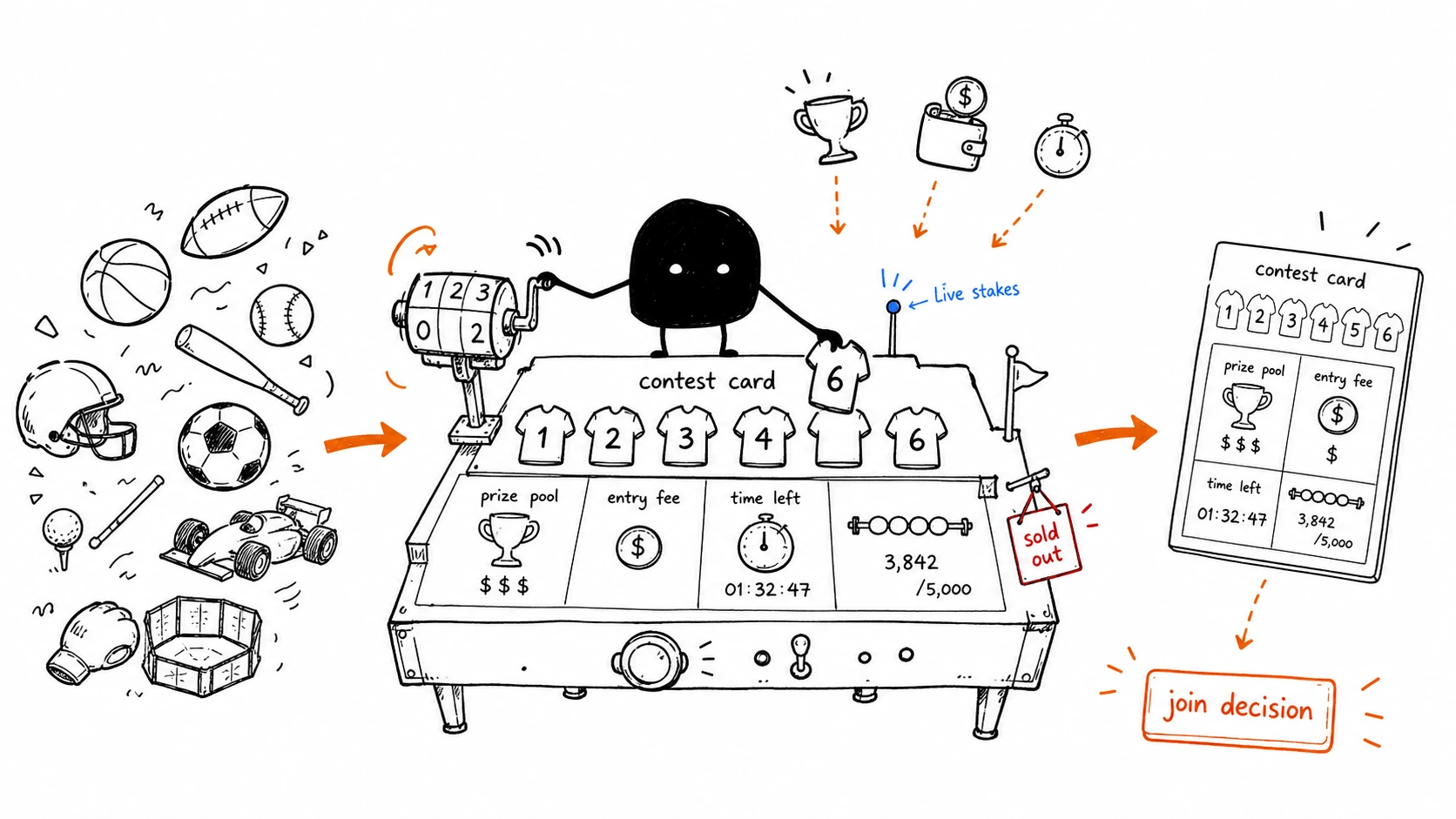
Join or skip. Cash or free-to-play. Which lineup. All of it happens in a single card. I redesigned the contest card architecture to carry maximum decision-relevant information, prize pool, entry fee, player count, time to start, almost-sold-out signals, in one glanceable unit. This became the core UI pattern the entire app was built around.
Scoped for UI/UX.
Delivered far more.
A complete app.
Every screen. Every state.
Live on the App Store.
Users. Growth. More formats coming.
"Tejas delivered the complete design of a real-money sports app I couldn't have built without him. He understood the domain fast, pushed back when needed, and shipped a product I'm genuinely proud to have in the App Store."
Mostly manual.
This one required real learning.
| AI Tool | Used for | Human override |
|---|---|---|
| Claude / ChatGPT | Real player names, real contest titles, real geographic locations for realistic mockups | All design decisions, all UX logic, all visual craft |
| None (majorly) | This project was largely human-executed. Domain complexity required manual research and learning. | Watched gameplay videos, studied competitor apps, designed formats by genuinely understanding them |
"This was the project where I learned the most manually. I watched gameplay videos, studied competitor apps, and designed the gameplay formats by genuinely understanding how they work. AI filled in the details, real player names, real stadiums, but the design thinking was entirely mine."