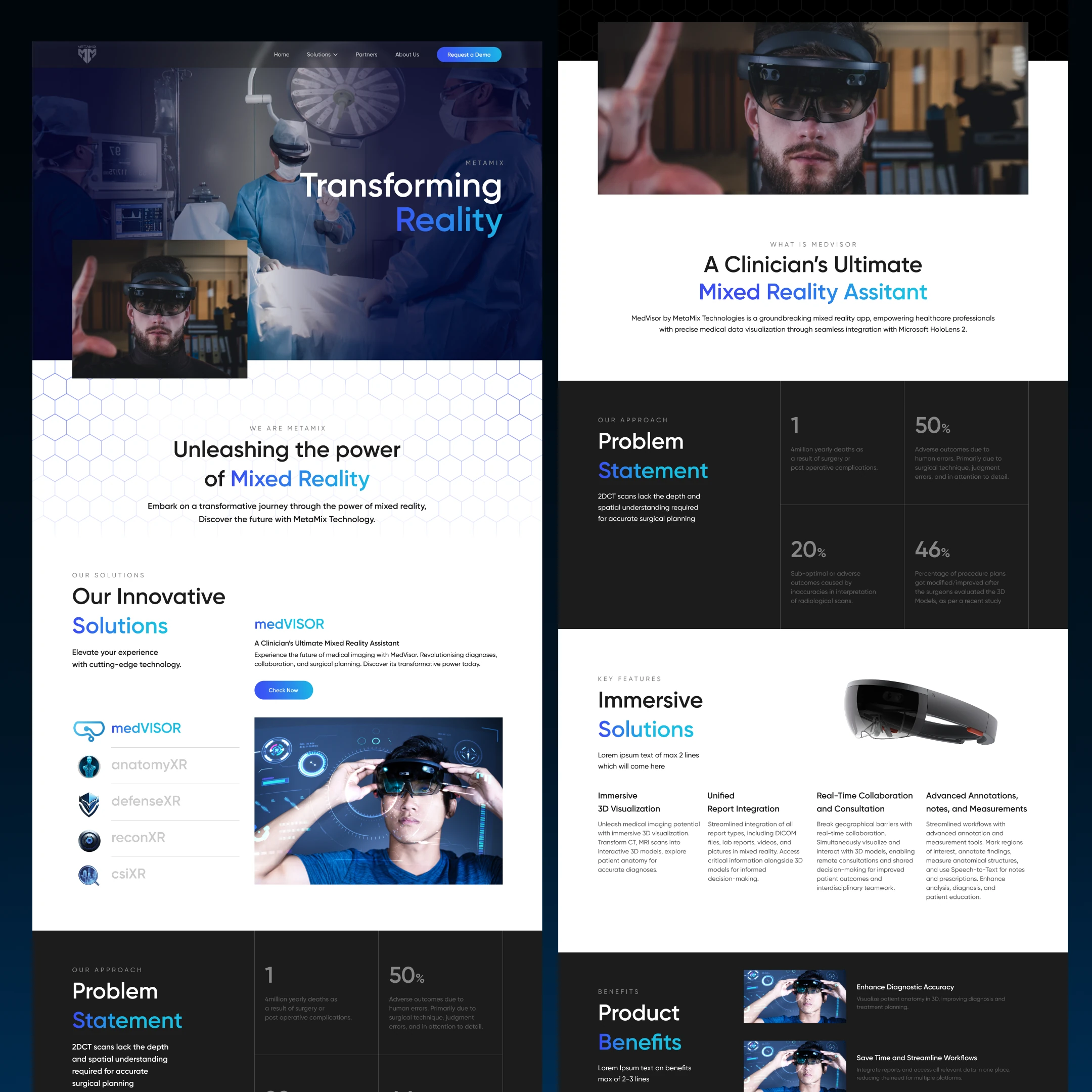
Mixed Reality surgical planning for Microsoft HoloLens. A 0→1 product designed for senior surgeons before spatial computing became mainstream.
I designed a spatial surgical planning product for Microsoft HoloLens, built for senior surgeons in Delhi. Enter the password below or request access.
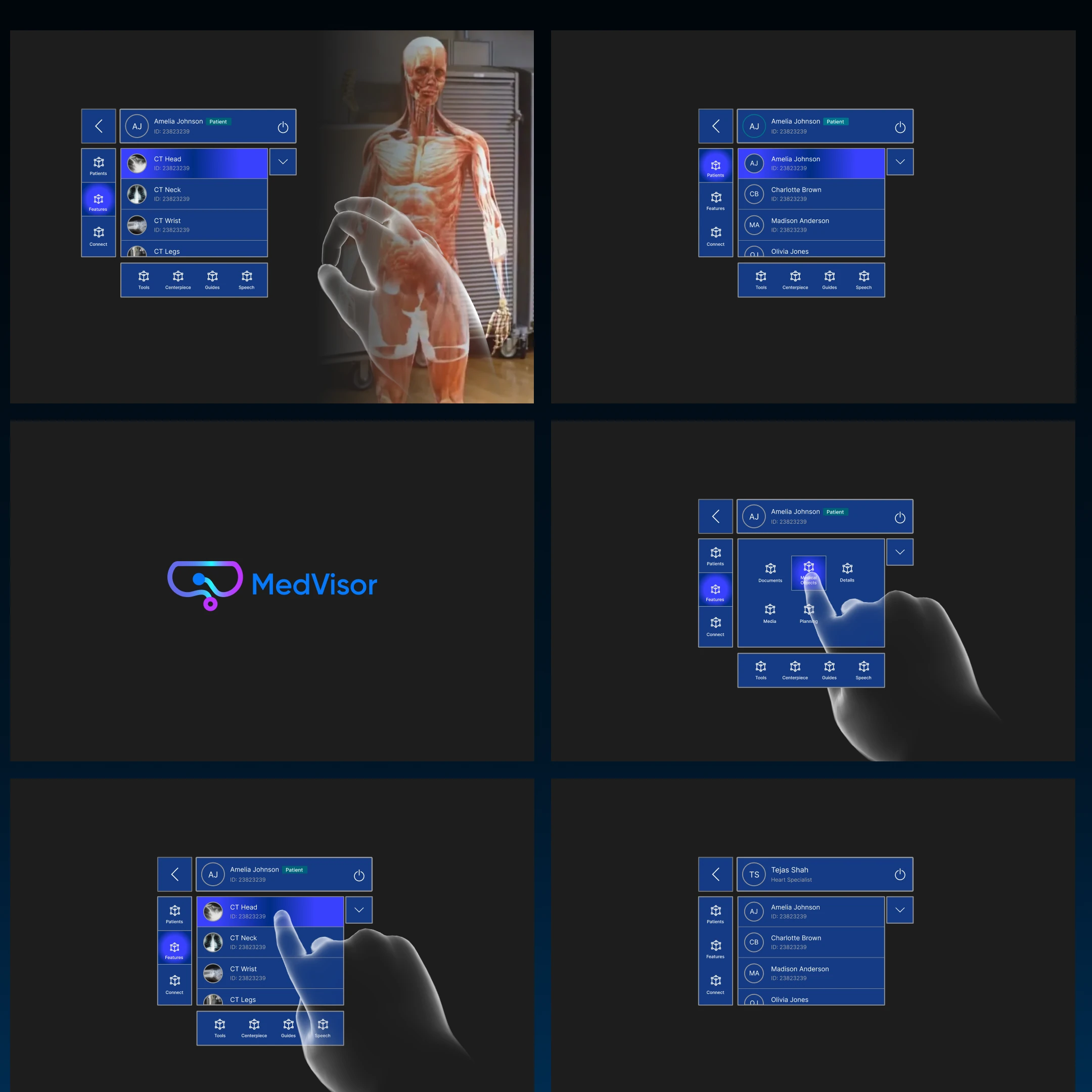
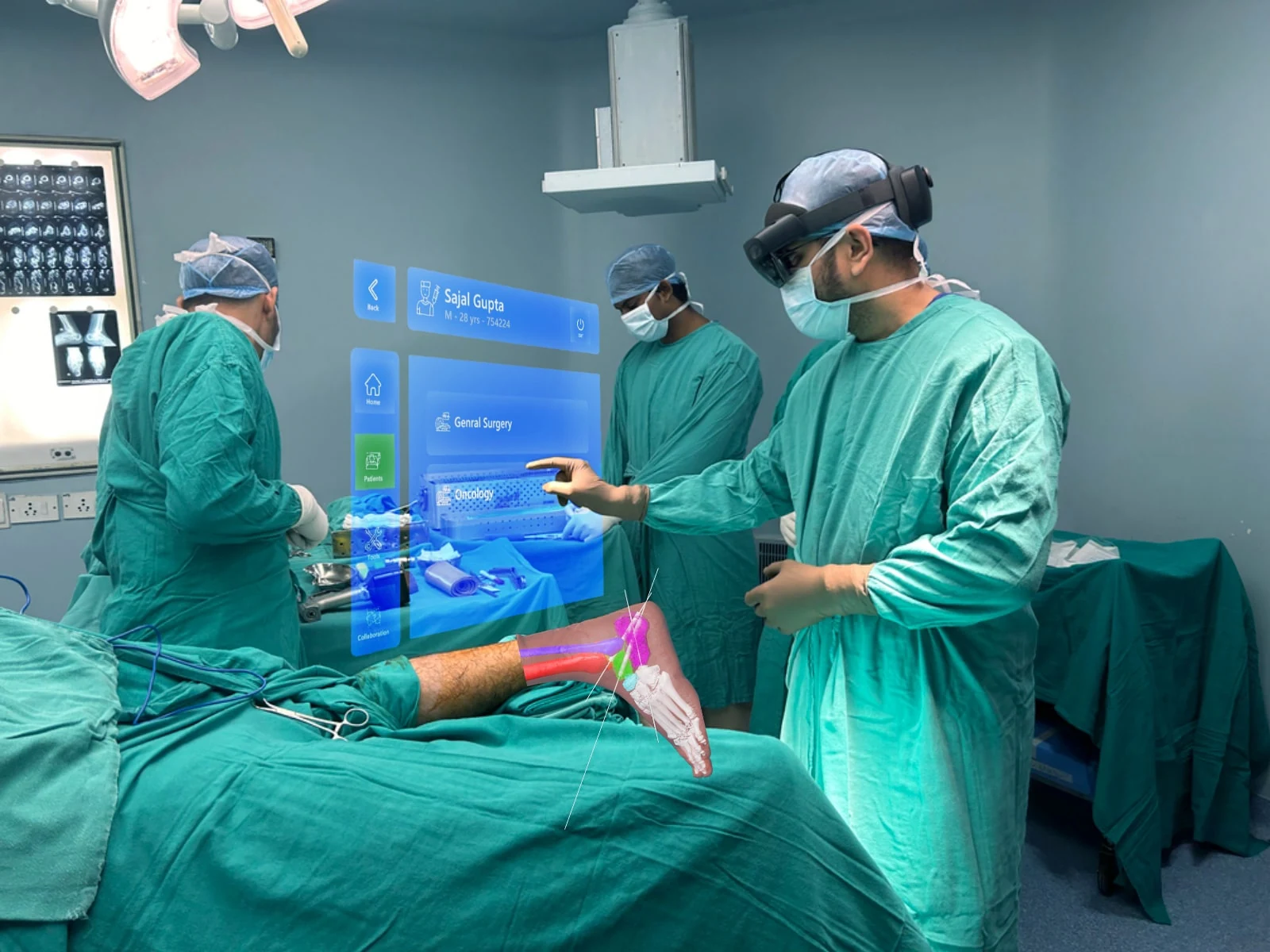
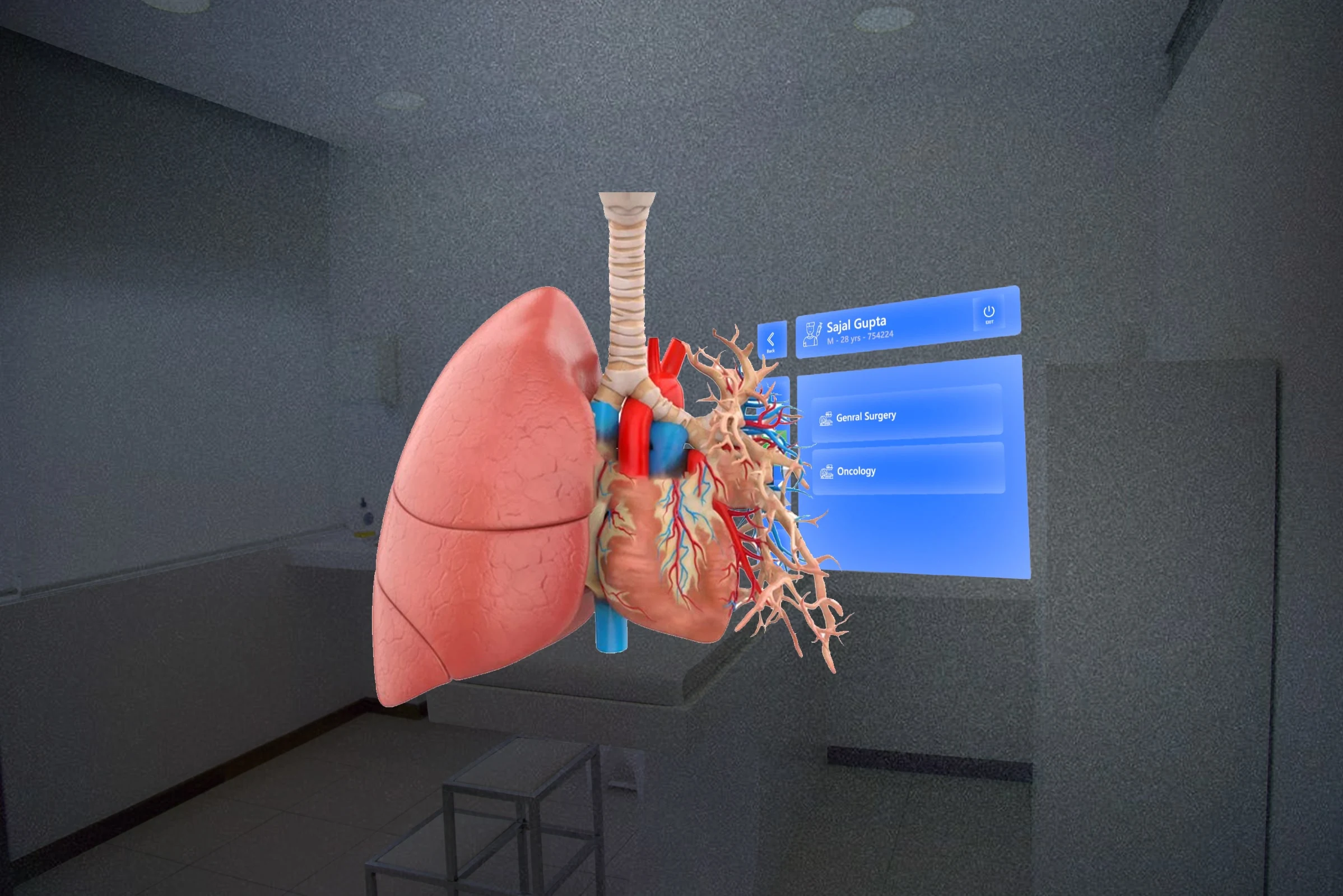
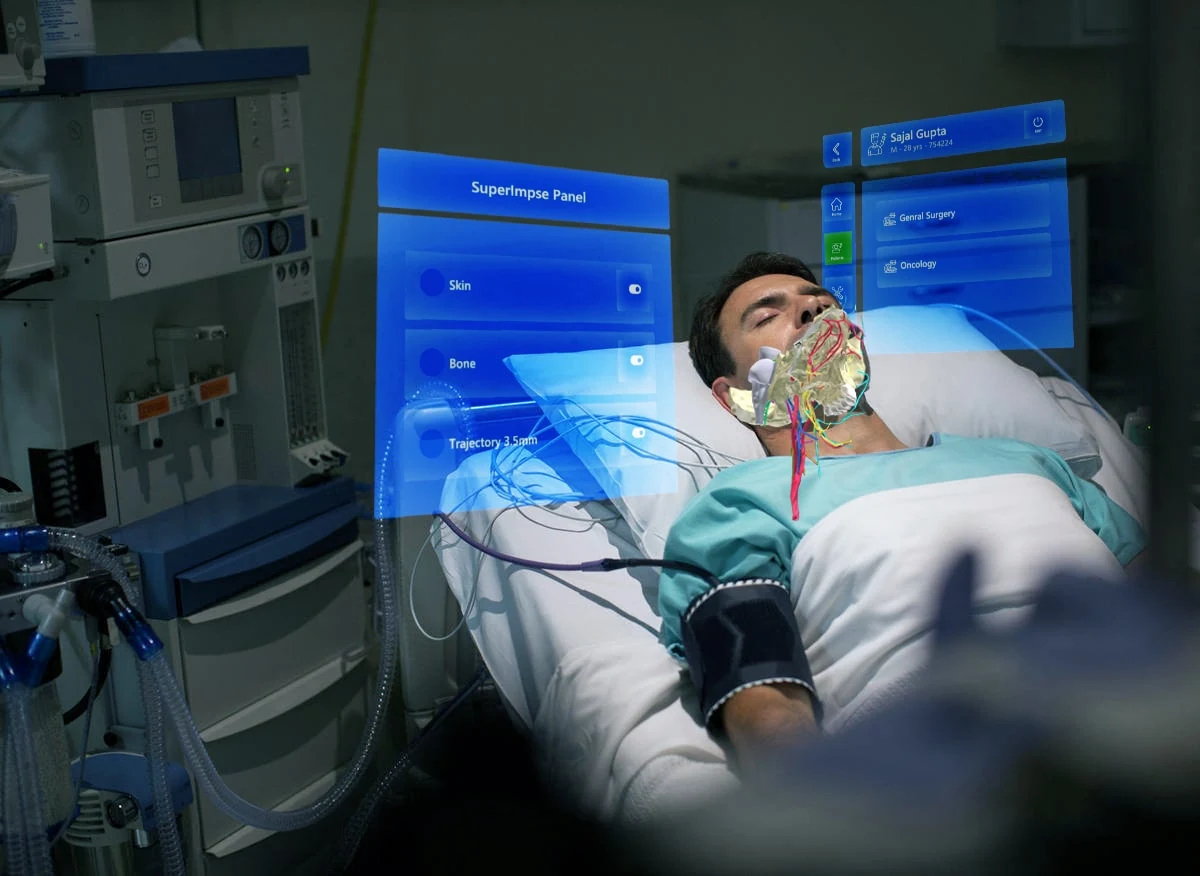
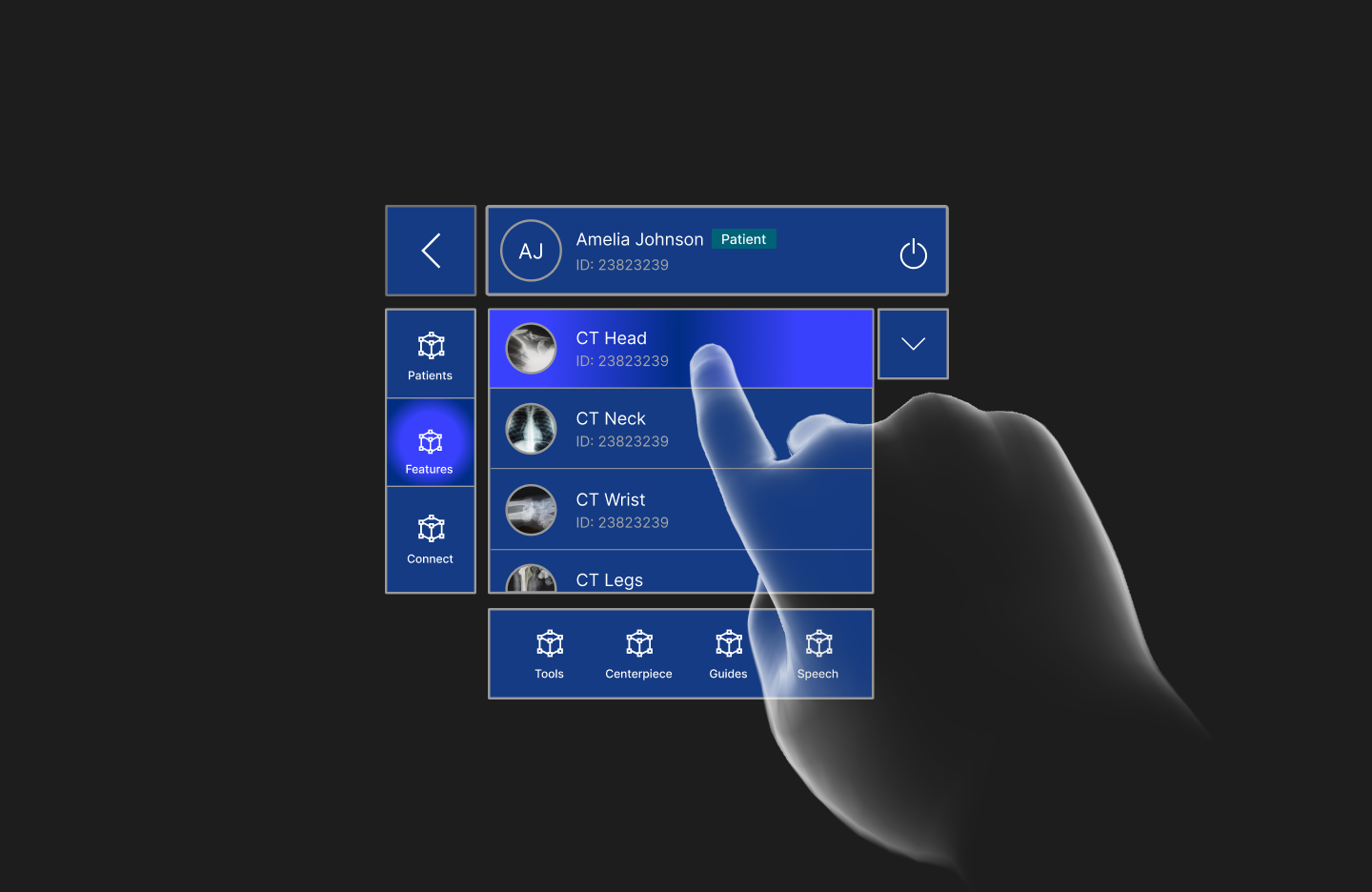
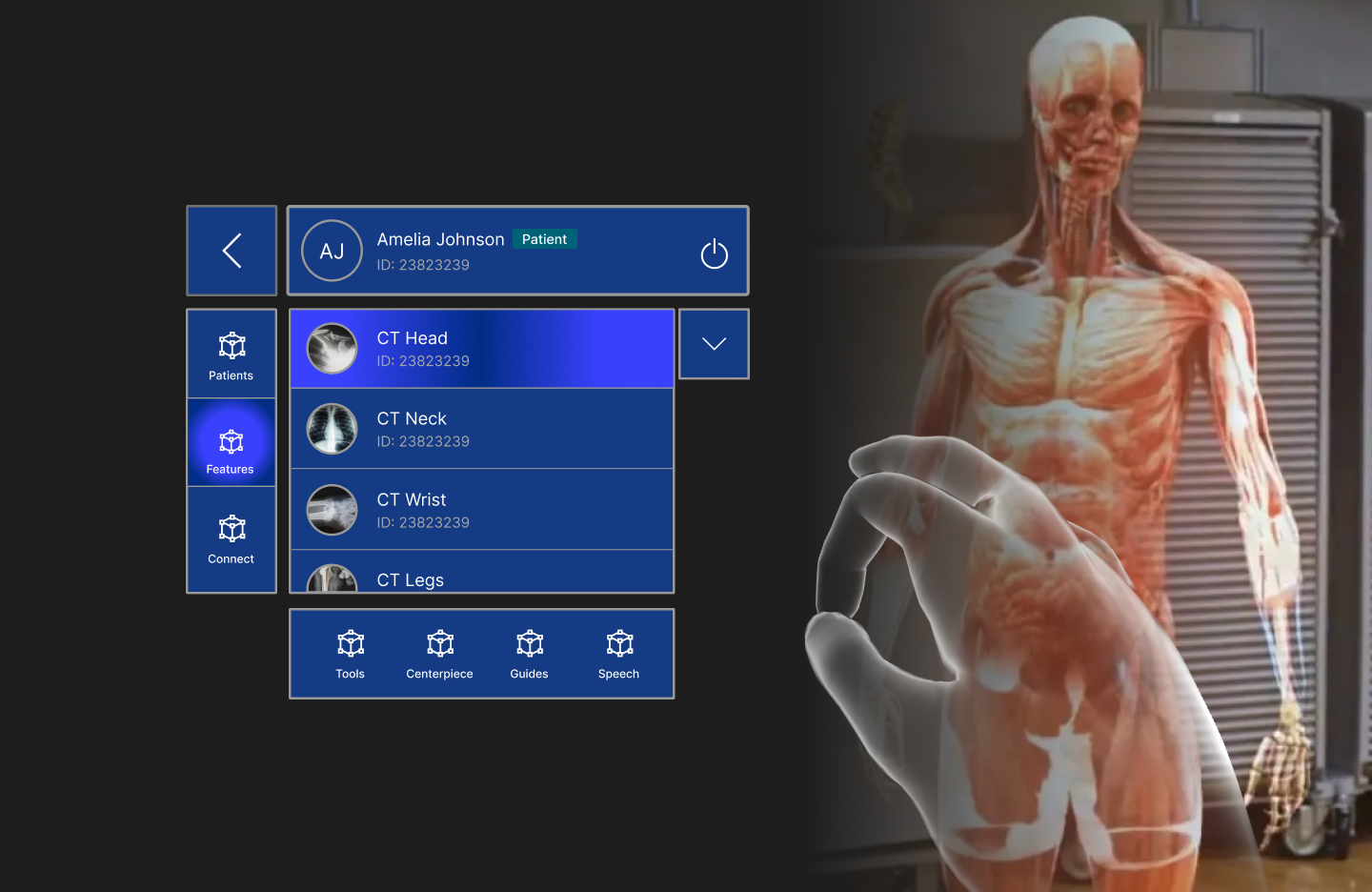
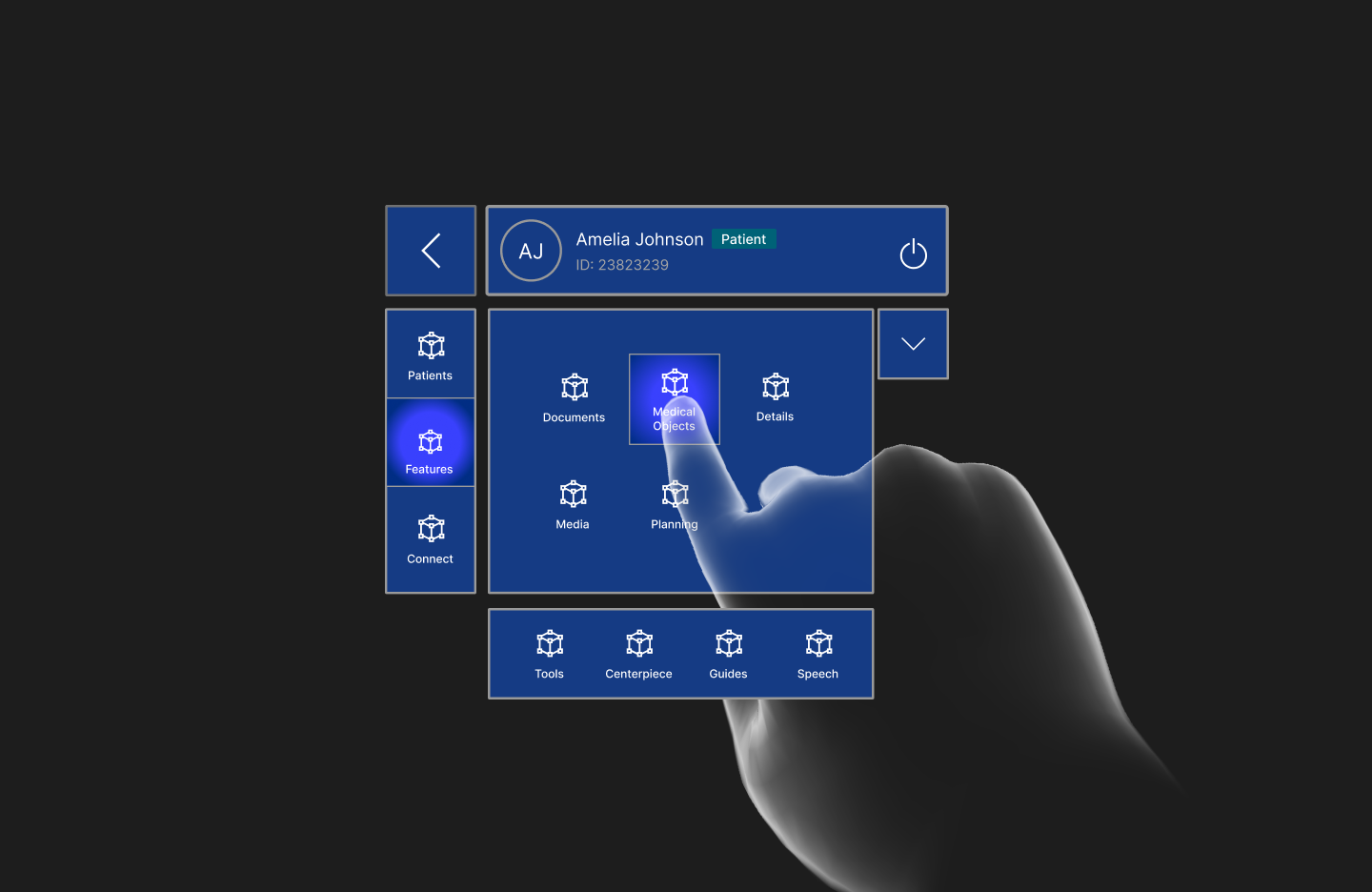
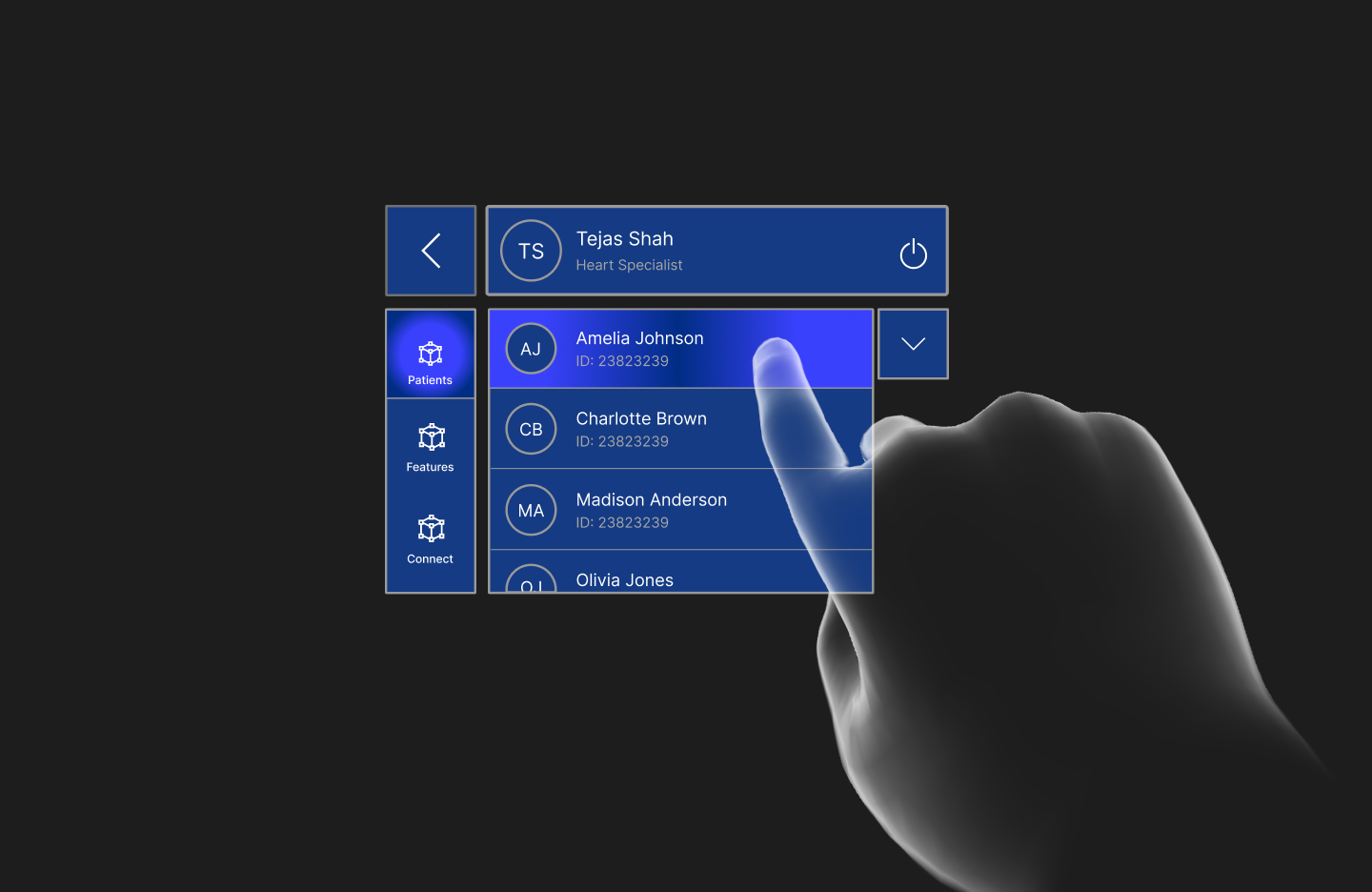
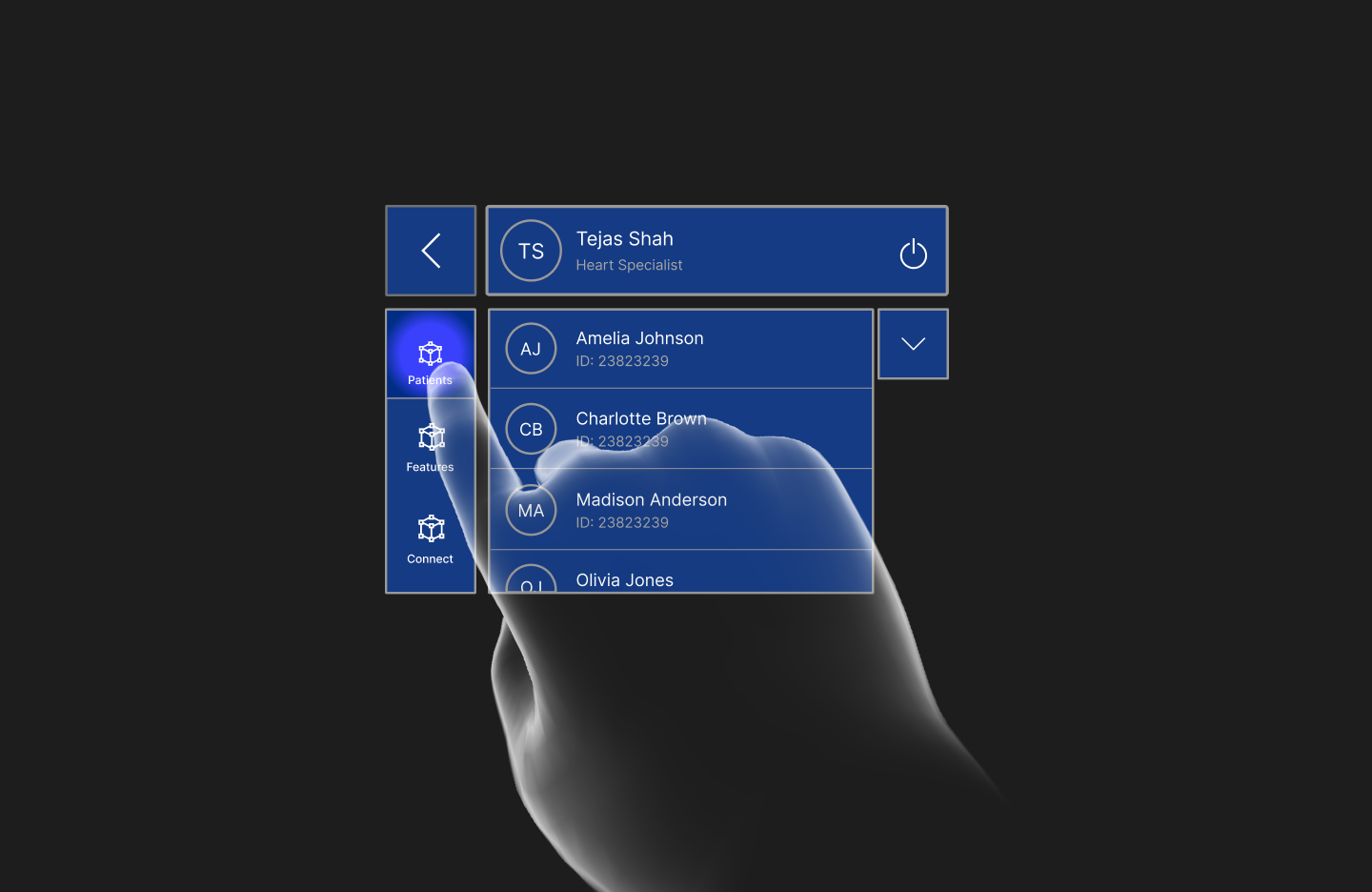
Medvisor bridges the gap between a patient's CT scan and the surgeon's pre-operative decision-making. Surgeons put on the HoloLens device, navigate to a patient profile, and access their full 3D CT scan as a manipulable holographic object in physical space.
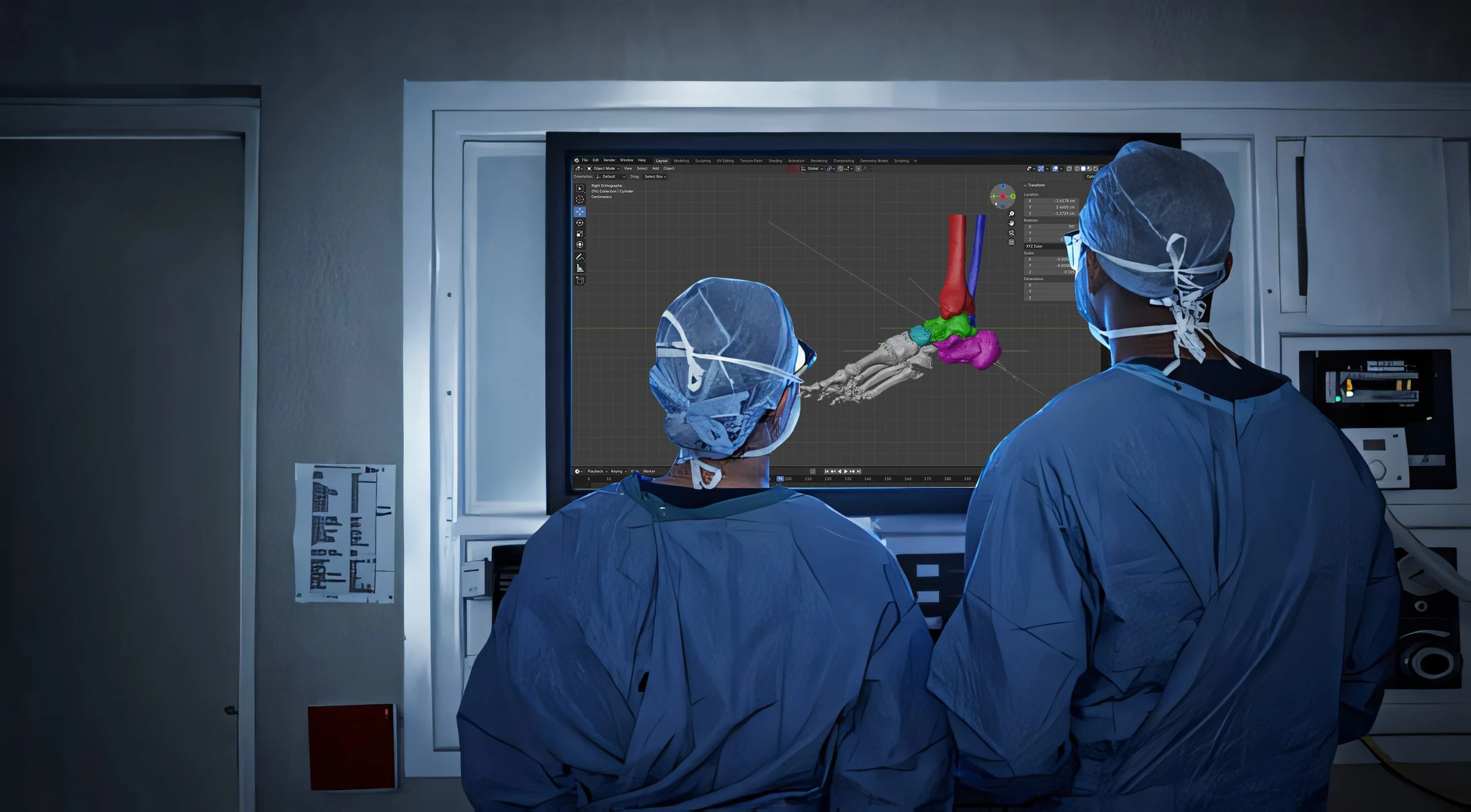
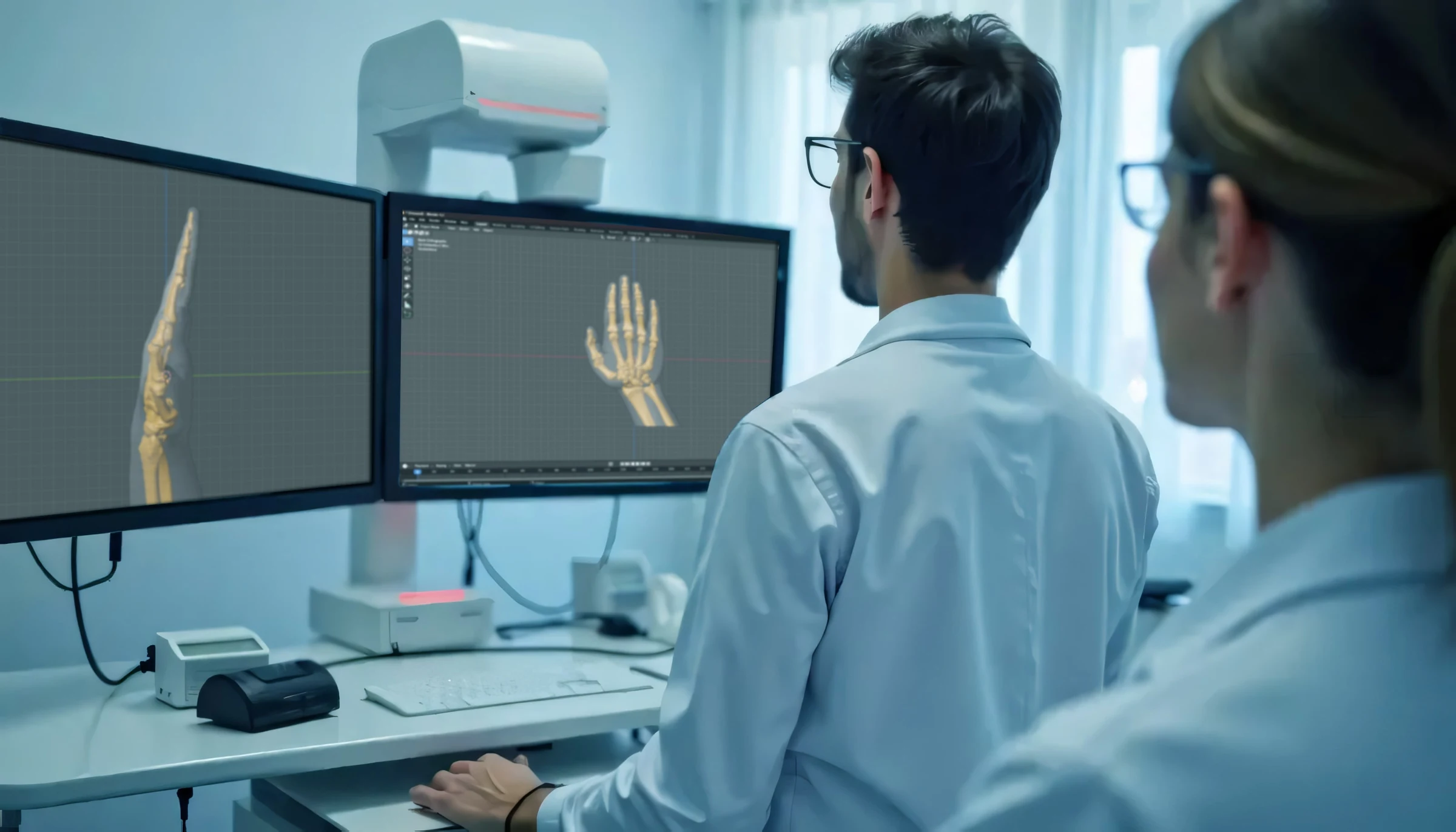
Before Medvisor, surgeons worked from flat 2D imaging. Same data — different dimension. What changed: seeing a problem in three dimensions, at scale, in space, before the first incision, changes surgical decisions fundamentally.
"This was the most revolutionary product we have ever experienced. It can save many lives." — Delhi Surgeon Team
Surgeons seeing patient anatomy in mixed reality — before touching a scalpel.
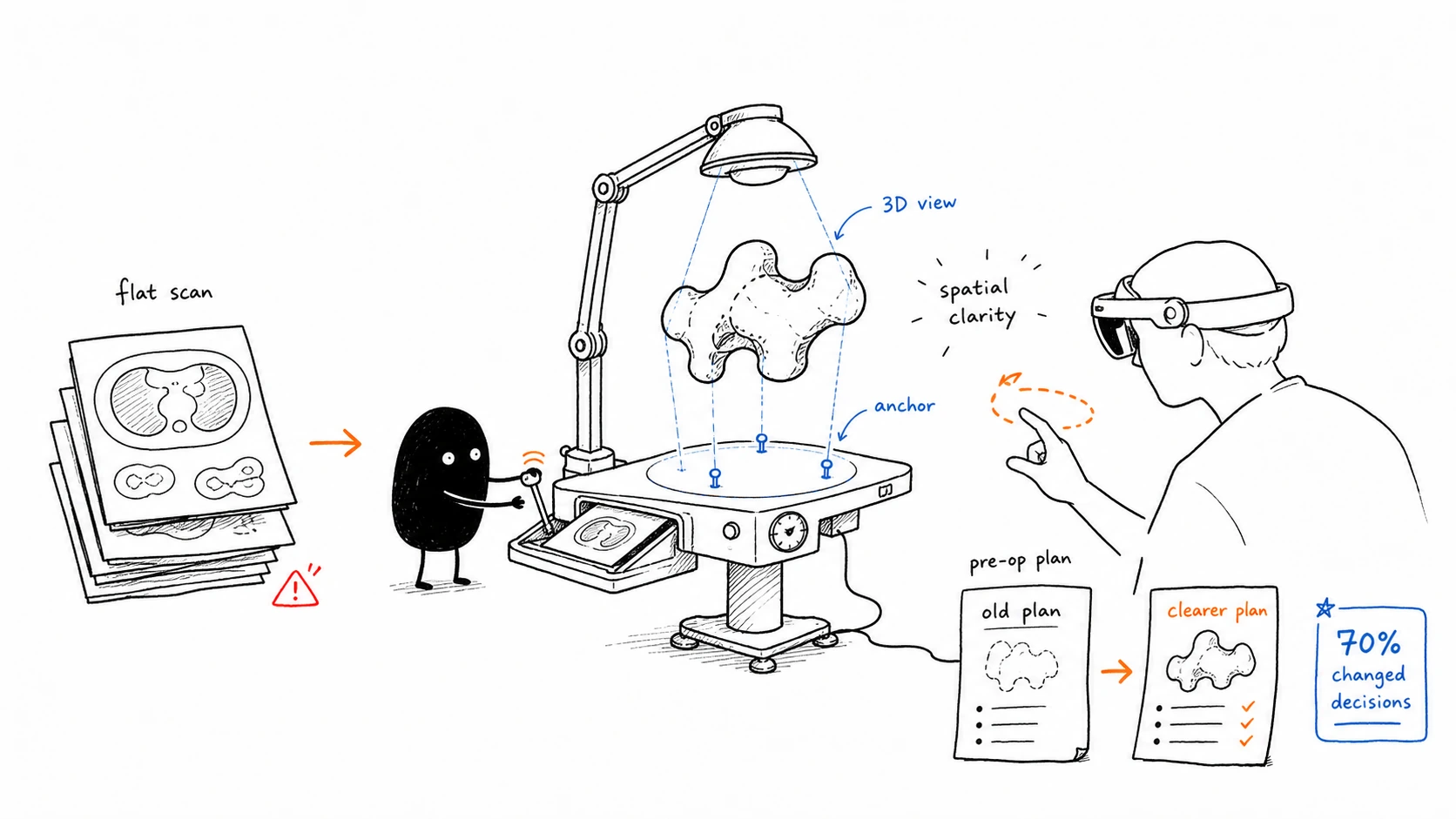
This was a complete 0→1 build. A group of senior Delhi surgeons had a clinical hypothesis: if they could interact with a patient's 3D CT data spatially before surgery, their decisions would be more accurate.
The challenges were layered — unknown domain (no prior MR design experience), unknown technology (HoloLens has its own entirely different design system), unknown industry (surgical workflows were new territory), and safety-critical stakes (a design error in a medical tool is not a UX bug — it is a patient safety risk).
Everything had to be learned, then applied correctly, the first time.
The mixed-reality surgery market is projected to grow from $8.6B (2025) to $17.2B (2030). Today it is dominated by well-funded, enterprise-sold platforms. Medvisor's significance is one of timing and access — it shipped on the HoloLens Store as an independent product before the AI boom and before Apple Vision Pro existed, achieving a measurable clinical outcome on a fraction of these players' resources.
Swipe to compare →
| Criteria | Medivis | Surgical Theater | Augmedics | Brainlab | Medvisor ↗ |
|---|---|---|---|---|---|
| Focus | Pre-op + intra-op | Pre-op rehearsal | Intra-op navigation | Surgical navigation | Pre-op decision support |
| Platform | HoloLens 2 + Vision Pro | VR/AR headsets | Proprietary AR headset | Proprietary + Brainlab MR | Microsoft HoloLens (store) |
| Backing | VC-funded, NYC | Established, global | FDA-cleared, scaled | Enterprise giant | Independent, India |
| Strength | Real-time + AI, hospital partnerships | Patient-specific rehearsal | Live intra-op spine leader, 10,000+ surgeries | Enterprise integration, scale | Early-mover · store-distributed · proven outcome |
| Key gap | Expensive, long hospital sales cycle | VR-heavy, neurosurgery-focused, costly | Spine-only, not pre-op planning | Legacy, expensive, not MR-native | Early-stage scope, single surgeon group |
| Distribution | Enterprise hospital sales | Enterprise | Enterprise / FDA | Enterprise | Microsoft HoloLens Store — accessible |
| Clinical outcome | Qualitative hospital testimonials | Rehearsal value stated | 10,000+ AR surgeries | Established enterprise results | 70%+ of surgeons changed pre-op decisions |
Before a single screen was designed, I read Microsoft's full spatial UX documentation — learning principles that have no equivalent in web or mobile design.
The hardest design decision was not a single call — it was the entire paradigm shift. Every UX convention I had built over years became partially or completely inapplicable in a spatial environment.
"I had to unlearn normal design and re-learn spatial design simultaneously while building for a safety-critical medical application. The margin for error was not 'bad UX' — it was 'a surgeon makes the wrong call.' That responsibility changes how you think about every single decision."
The solution: radical simplicity at every interaction point. In an environment where everything is new and unfamiliar, cognitive load reduction is not a design principle — it is a patient safety principle.
After studying surgical planning workflows with the Delhi surgeon group, one insight became the design foundation: existing pre-operative tools gave surgeons the same data Medvisor did. What they lacked was perspective — the ability to move around a problem, see depth, understand the spatial relationship between affected and healthy tissue.
The entire UX was built around this: not adding features, but removing every barrier between the surgeon and the 3D object in front of them. The interface disappears. The patient's anatomy is what remains.
| Phase | Duration | Key Activities |
|---|---|---|
| Technical Research | 3 weeks | Full Microsoft HoloLens design documentation study · Spatial UX principles · Unity environment constraints · 3× pixel scaling · Gesture vocabulary mapping |
| Clinical Research | 2 weeks | Surgical workflow consultation with Delhi surgeon group · Pre-operative planning process mapping · Safety-critical design requirements identification |
| Brand & Identity | 1 week | Logo design (stethoscope + HoloLens mark) · Colour system for MR environment · Typography adapted for spatial display |
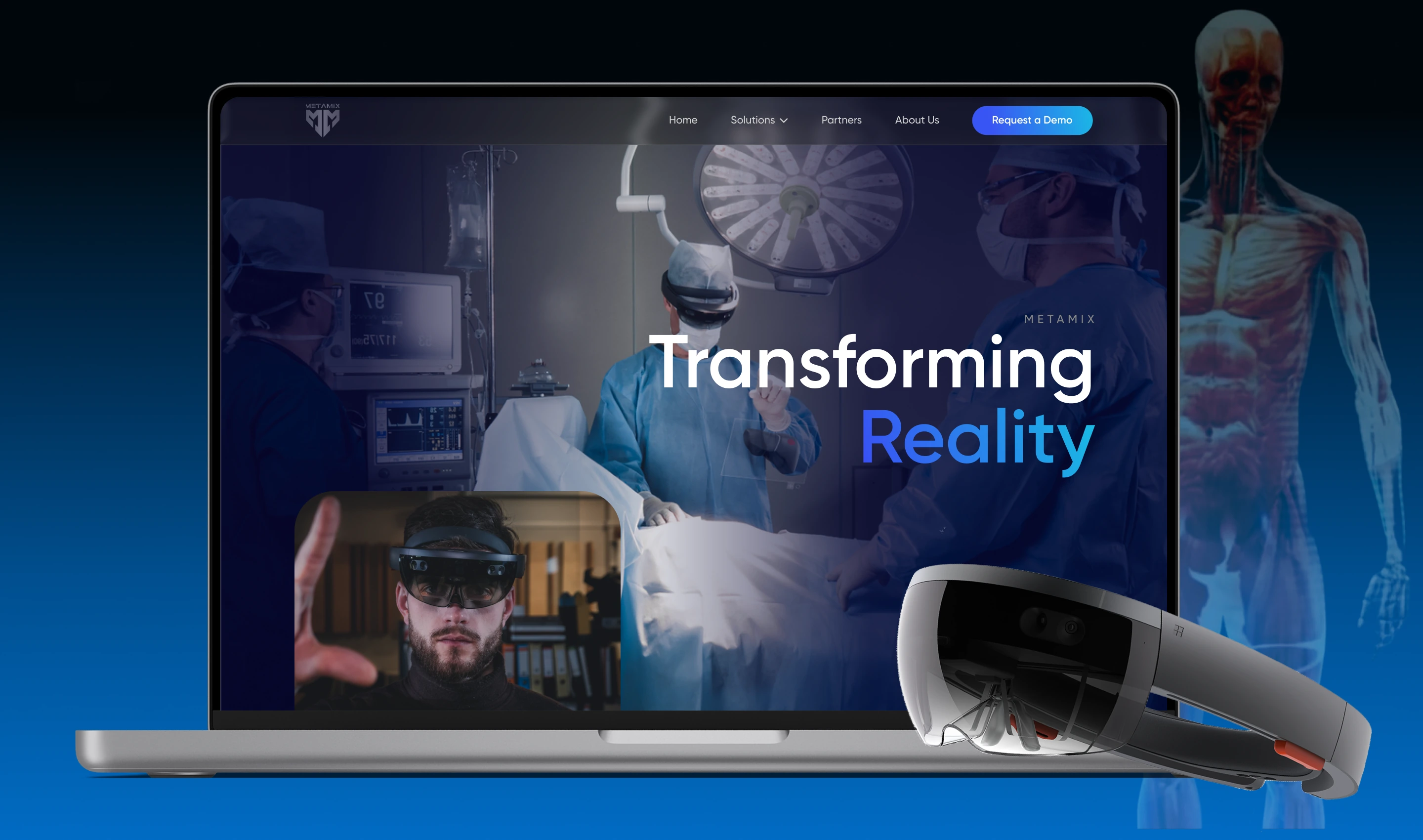
| Spatial Design | 6 weeks | Full HoloLens application design · Gesture system · Voice command layer · Onboarding · All patient management and clinical screens |
| Collaboration & Handoff | 2 weeks | Developer sessions with the Unity team · 3D object integration design · Marketing landing page and device showcase handoff |
"As one of the first Microsoft Mixed Reality Partners in India, we stand at the forefront of innovation in healthcare technology. This recognition not only reflects our technical expertise but also our commitment to pioneering immersive solutions that redefine how doctors learn, plan, and perform. Our collaboration with leading medical professionals underscores the trust placed in our work and the tangible value it brings to real-world clinical settings."
This is a clinical outcome, not a UX metric. It means the product demonstrably improved surgical precision for the majority of surgeons who used it. That's not a conversion rate. That's a real-world patient safety outcome.
"This was the most revolutionary product we have ever experienced. It can save many lives."
"There was no AI to help me understand what a surgeon needs before an operation. I had to sit with the doctors, understand the workflow, understand the fear of uncertainty before a critical procedure, and then translate that into a spatial interface. That's the work no tool does for you."
| Tool | Used for | Note |
|---|---|---|
| No AI tools | Not available at time of project | Predates Claude, Figma AI, and mainstream LLM tooling |
| Microsoft Docs | HoloLens design system — full documentation read and applied manually | 100% human research and interpretation |
| Surgeon Consultation | Surgical workflow, pre-operative process, patient safety requirements | Learned directly from the clinical team — no shortcut available |